PollinERA presenting a new paradigm for pesticide environmental risk assessment at EurBee 11
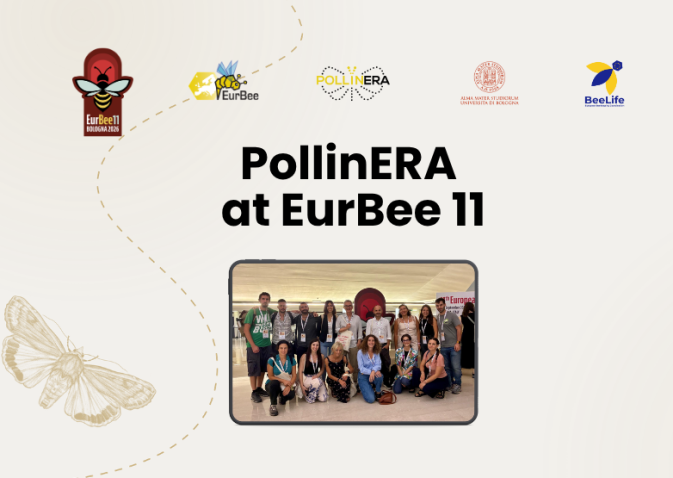
A key part of scientific work is ensuring it reaches the right audience to drive positive change in the world. Scientific research must reach the right people, like experts and professionals who can build on its findings and drive meaningful change, to have a real impact. The EurBee conferences have established themselves as key scientific events for apidologists in Europe and beyond.
The 11th European Conference of Apidology, held between 7 and 10 September 2026 in Bologna, Italy, brought together more than 570 scientists from Europe and beyond, providing a platform for connecting research communities, international organisations and national authorities with the most recent research findings from the world of apidology.
Bringing the project’s research into the spotlight, Prof. Fabio Sgolastra and Rafaela Tadei from the University of Bologna, a co-organiser of EurBee, shared PollinERA’s latest results as part of Work Package 1, “Pollinator exposure and sensitivity”. Their presentation focused on the lethal and sublethal effects of the pesticide flupyradifurone on two bee species and added to the understanding of how pesticide exposure can affect pollinators.
Offering a fresh perspective to the debate on pesticide risk assessment, Dr. Noa Simon Delso from BeeLife European Beekeeping Coordination held a presentation, “From Substances to Systems: A New Paradigm for Pesticide Environmental Risk Assessment and Pollinator Protection”, to a broad, cross-disciplinary academic audience. She emphasised the need to rethink current approaches to pesticide risk assessment, moving beyond evaluating individual substances to a more holistic understanding of their cumulative effects within ecosystems. The PollinERA project's approach sparked interest and curiosity, opening the door to further discussion. The conversation continued the following day at the APITOX workshop, where the topic was revisited, reinforcing the importance of exploring new ways to assess pesticide risks and better protect pollinators.
Reforming EU chemical risk assessment and moving towards a systems-based environmental risk assessment is at the core of PollinERA’s mission. Interested to learn more? Find insightful PollinERA resources below:
- Escaping the Reductionistic Trap: A Systems-Based Approach to Environmental Risk Assessment
- Reforming EU chemical risk assessment: from regulatory bottlenecks to systems solutions
- A Regional Budget System for Pesticide Management: Systems-first environmental risk assessment: the case for change
- Pesticide Regulation and the Omnibus Process: A systems-based regional management approach – Operational framework, fair access, and market incentives
- Practitioners’ perspectives on EU environmental risk assessment for plant protection products