PollinERA presented at SETAC Europe’s 36th Annual Meeting
From 17 to 21 May 2026, the Society of Environmental Toxicology and Chemistry (SETAC) Europe held its 36th Annual Meeting in Maastricht, The Netherlands.
The meeting targeted research communities, industry stakeholders, business partners, EU institutions and national authorities and aimed to raise awareness within the scientific community and relevant sectors while promoting the exchange of knowledge and expertise.
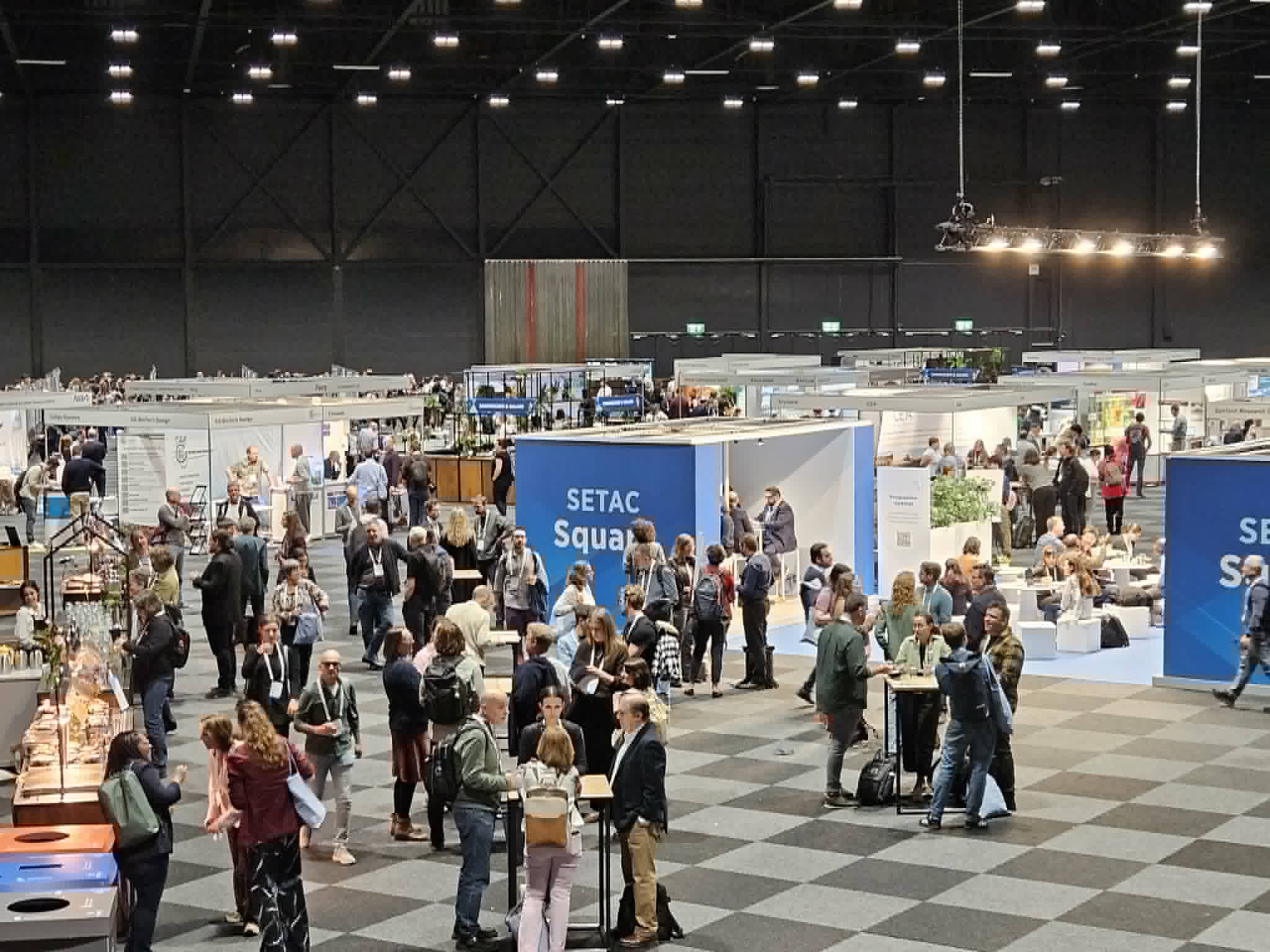 Photo of SETAC 2026 by Mikaela Gönczi
The PollinERA project was presented by the Swedish University of Agricultural Sciences (SLU) team through two scientific posters, showcasing curious results.
Alina Koch, a researcher at the Centre for Pesticides in the Environment (CKB) at SLU, presented the characterisation of Pollinator exposure pathways through multi-matrix pesticide residue analysis.
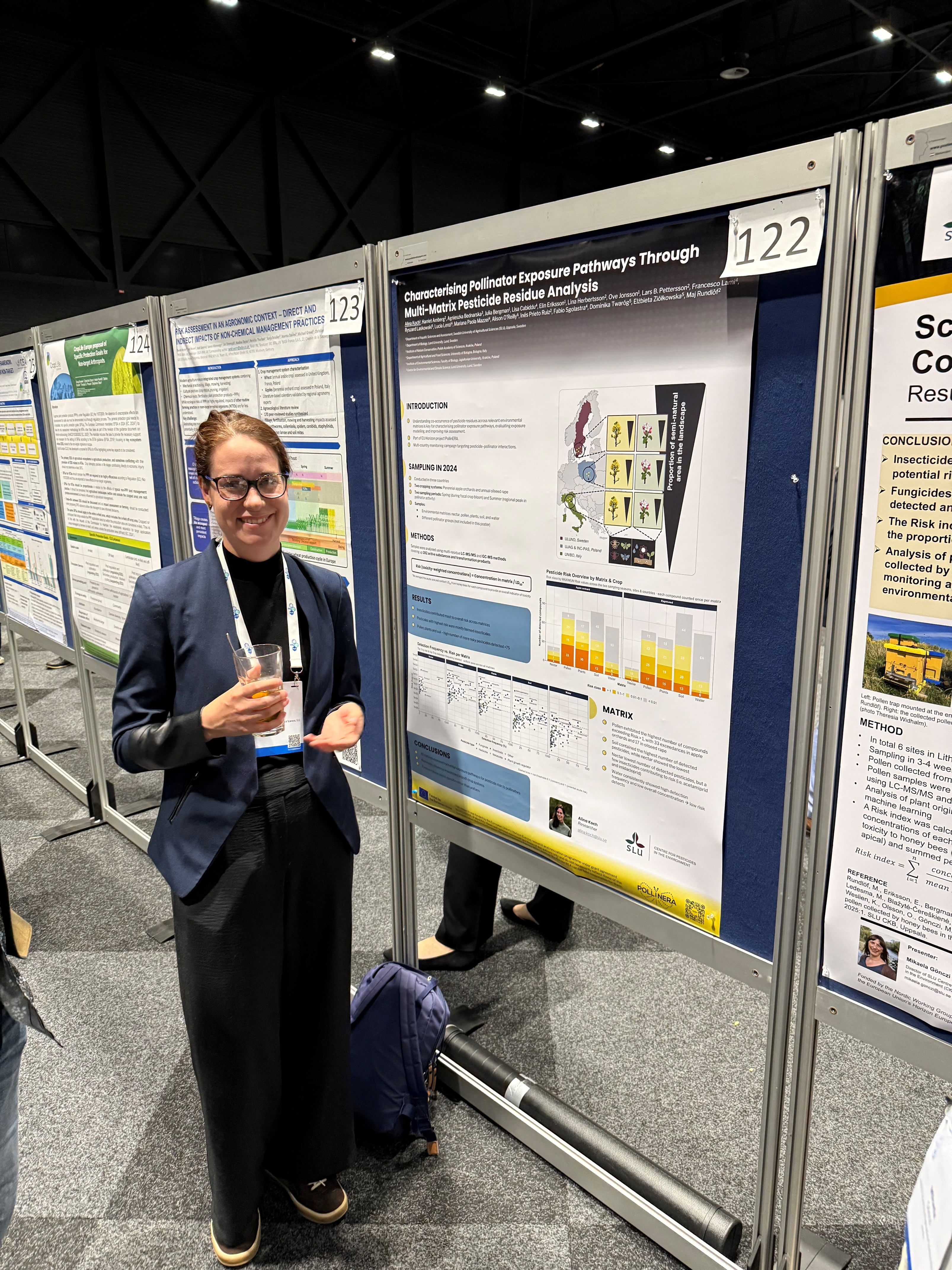 Alina Koch with the poster, photo: Ove Jonsson
One of the main aims of PollinERA’s Work Package 4: Monitoring and risk indicators (WP4) is to develop and test a co-monitoring scheme for tracking pesticide exposure and communities of key pollinator groups across European cropping systems, as well as to develop pesticide risk indicators for these pollinators. An important step in the development of the co-monitoring scheme is the careful selection of monitoring sites. Therefore, the WP4 team selected high pesticide risk agricultural landscapes in two types of cropping systems across Europe: 1) intensive arable including oilseed rape and 2) intensive perennial including apple orchards. Based on this selection, in 2024, WP4 conducted fieldwork in Sweden, Poland and Italy, gathering important data for the development and testing of the co-monitoring scheme. Alina’s poster describes the findings of this activity:
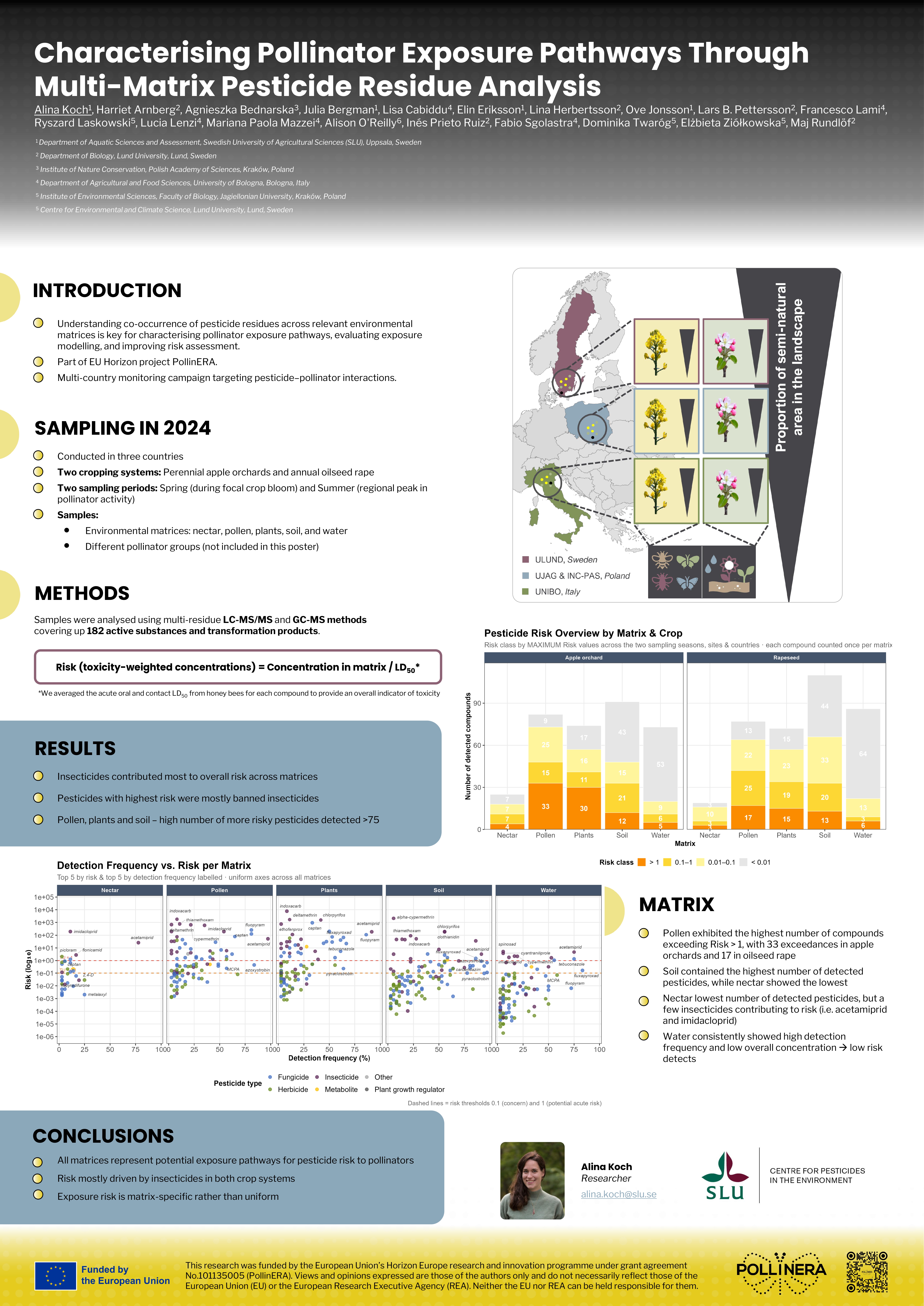
Poster for Characterising Pollinator Exposure Pathways Through Multi-Matrix Pesticide Residue Analysis
Mikaela Gönczi, director of the CKB at SLU, presented a poster, based on the results of a pesticide screening of pollen in Sweden, Norway, and Lithuania, performed in 2024 using analytical methods developed within PollinERA.
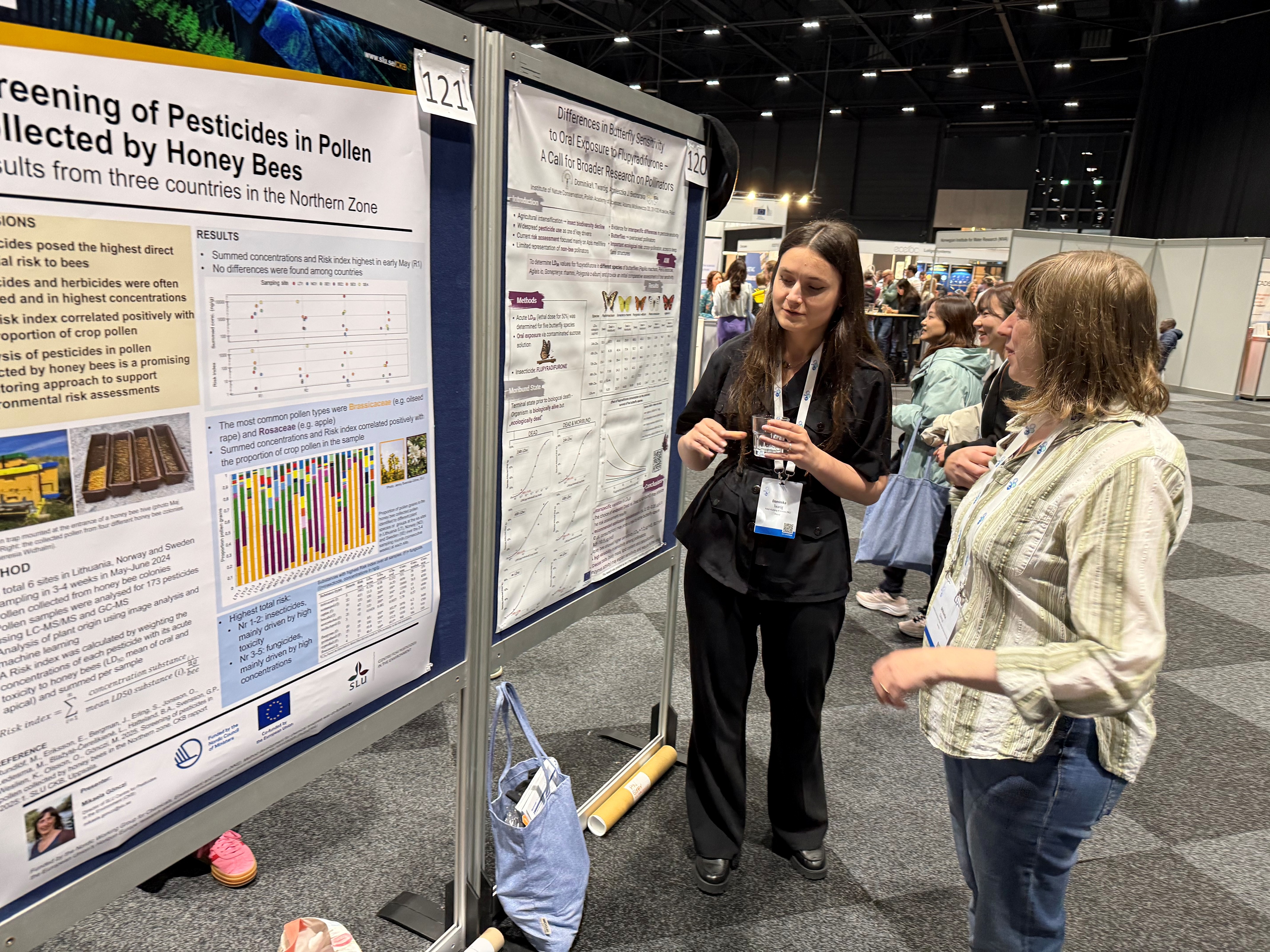 Mikaela Gönczi with the poster, photo: Ove Jonsson
During the project, financed by the Nordic Working Group for Chemicals, Environment and Health (NKE), pollen was collected from honey bees returning to their hives at six sites across the three Northern countries during May–June 2024. The sites were located in agricultural areas expected to have high pesticide use. Weekly samples were taken over 3–4 weeks using pollen traps, with sampling beginning at the start of apple orchard bloom in the region. This poster shows new analytical methods for pesticides across different compartments that have been developed by SLU and will be published later. It also shows how pesticide monitoring in the terrestrial landscape can be conducted through a simple, cost-effective method.
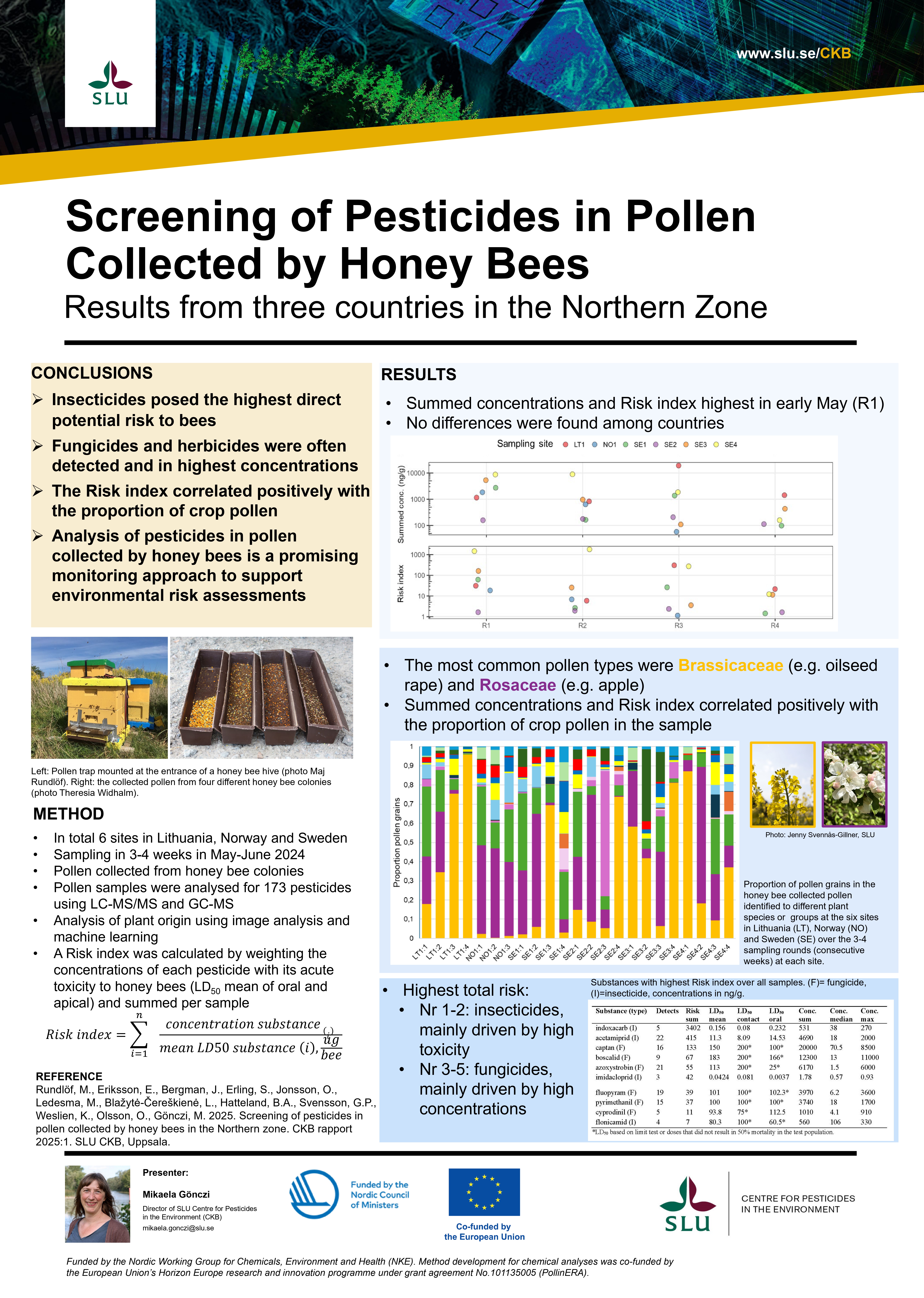 Poster for Screening of Pesticides in Pollen Collected by Honey Bees